Quiet Luxury vs Loud Luxury: 7 Key Differences That Define Each Style
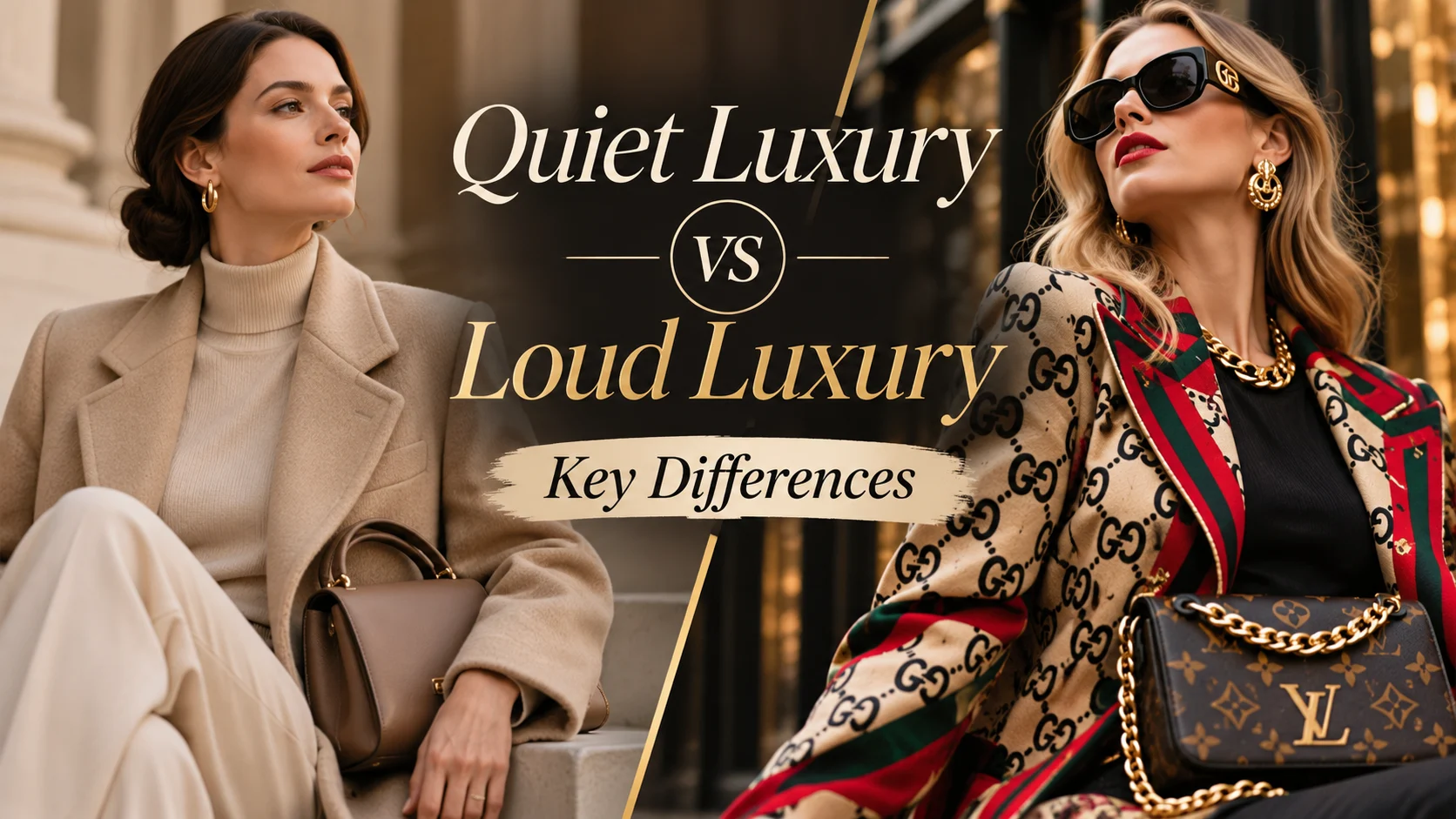
A beautifully tailored cashmere coat with no visible branding. A designer handbag covered in recognizable monograms. Both can cost thousands of dollars, yet they communicate luxury in completely different ways.
This is the distinction between quiet luxury and loud luxury.
Quiet luxury emphasizes understated elegance, exceptional materials, refined silhouettes, and discreet branding. Loud luxury celebrates visible designer identities, statement pieces, bold patterns, and recognizable symbols of status.
Neither approach is automatically more expensive, better made, or more sophisticated. The difference lies primarily in how each communicates taste, identity, and wealth.
Understanding these two styles can help you make more thoughtful fashion choices, whether you’re building a timeless wardrobe or embracing expressive designer fashion.
What Is Quiet Luxury?
Quiet luxury is a fashion philosophy built around subtle sophistication rather than obvious displays of wealth.
Instead of relying on prominent logos, it emphasizes fabric quality, tailoring, proportions, and construction. The appeal often lies in details that become apparent only upon closer inspection.
Imagine a perfectly fitted wool coat, a fine-gauge cashmere sweater, tailored trousers, and polished leather loafers. None needs a recognizable logo to create an elegant appearance.
The style is closely associated with neutral colors, classic silhouettes, and carefully selected wardrobe essentials.
Brands frequently connected with this aesthetic include Loro Piana, Brunello Cucinelli, The Row, and certain collections from Hermès. However, not every product from these brands fits the quiet luxury aesthetic.
More importantly, quiet luxury does not require an exceptionally expensive wardrobe. A well-tailored, unbranded outfit can communicate the same visual restraint.
The principle is simple: the clothing should attract attention through its design and execution, not through an immediately recognizable label.
What Is Loud Luxury?
Loud luxury takes a more expressive approach to high-end fashion.
Rather than concealing designer identity, it often makes that identity part of the outfit’s appeal. Monograms, prominent hardware, recognizable patterns, vivid colors, and dramatic silhouettes become defining features.
Consider a monogrammed designer handbag, an oversized statement belt, or a brightly patterned jacket paired with coordinated accessories.
These pieces are intended to be noticed.
Fashion houses such as Gucci, Versace, Louis Vuitton, and Balmain have produced collections featuring strong visual identities, although their designs also include understated options.
Loud luxury is not necessarily about wearing as many logos as possible. At its best, it reflects deliberate styling, creative expression, and an appreciation for distinctive design.
A bold designer piece can demonstrate as much craftsmanship and artistic consideration as a minimalist alternative.
Quiet Luxury vs Loud Luxury: Key Differences at a Glance
| Feature | Quiet Luxury | Loud Luxury |
|---|---|---|
| Branding | Discreet or minimal | Often prominent and recognizable |
| Colors | Neutrals and restrained palettes | Bold colors and striking contrasts |
| Design | Classic, refined silhouettes | Statement shapes and expressive details |
| Materials | Quality emphasized through texture and finish | Quality combined with visual impact |
| Style philosophy | Understated elegance | Visible individuality and status |
| Versatility | Often easier to mix and repeat | Frequently centered on standout pieces |
| Recognition | Appreciated through details | Often immediately recognizable |
These distinctions describe common tendencies rather than strict rules. Luxury fashion houses frequently produce both minimalist and expressive collections.
The 7 Key Differences Between Quiet and Loud Luxury
1. Branding: Discretion vs Recognition
Brand visibility is perhaps the clearest distinction.
Quiet luxury typically favors minimal branding. A beautifully constructed leather bag may feature only a discreet stamp or subtle hardware.
Loud luxury frequently uses logos and signature motifs as recognizable design elements.
Neither approach guarantees authenticity or quality.
A heavily branded product can be exceptionally well made, while an unbranded product can be poorly constructed. Branding tells you how a designer wants a product to be recognized, not necessarily how well it will perform.
2. Color Palettes: Restrained vs Expressive
Quiet luxury often relies on cream, camel, navy, charcoal, chocolate brown, and other versatile shades.
These colors make coordinating outfits relatively straightforward and allow texture, shape, and fit to become the focus.
Loud luxury embraces a broader visual vocabulary.
Vibrant prints, contrasting colors, metallic finishes, and distinctive combinations can turn an ordinary outfit into a statement.
For example, a monochromatic beige ensemble communicates a different mood from a patterned silk shirt paired with a brightly colored designer bag.
Both can be elegant when styled intentionally.
3. Materials and Craftsmanship: Subtle Details vs Visible Design
Quiet luxury places particular visual emphasis on materials such as cashmere, silk, fine wool, suede, and high-quality leather.
The texture of a fabric, the drape of a jacket, or the finishing of a seam may provide much of its appeal.
Loud luxury can use equally sophisticated materials but often combines them with embroidery, embellishment, distinctive hardware, or elaborate patterns.
The important distinction is not craftsmanship versus decoration.
It is whether craftsmanship is expressed discreetly or incorporated into a more noticeable design.
When evaluating either style, inspect stitching, fabric composition, lining, finishing, and how the garment fits.
A premium label alone cannot replace those checks.
4. Wardrobe Philosophy: Longevity vs Statement Dressing
Quiet luxury naturally lends itself to a carefully edited wardrobe.
A tailored blazer, classic trousers, quality knitwear, and versatile footwear can work across multiple seasons and occasions.
This approach connects closely with the principles discussed in our guide to curating a timeless personal style.
Loud luxury often revolves around memorable individual pieces.
A dramatic handbag or distinctive jacket may become the centerpiece of an outfit, while simpler garments provide balance.
However, statement fashion is not inherently short-lived. Iconic patterns and designs can remain desirable for decades.
The more useful question is whether a purchase suits your personal style beyond its initial appeal.
5. Social Signaling: Subtle Status vs Visible Identity
Luxury clothing communicates more than aesthetic preferences.
It can express belonging, individuality, cultural knowledge, professional identity, or financial success.
Quiet luxury is sometimes associated with the idea of wealth that does not need to announce itself.
Loud luxury is more openly associated with recognizable designer status and fashion visibility.
But these associations should not be mistaken for reliable indicators of someone’s wealth or social background.
Someone wearing an understated outfit is not necessarily wealthy, just as someone wearing a prominent logo is not necessarily seeking attention.
Fashion choices are personal, and their meanings vary across cultures and settings.
6. Styling: Effortless Coordination vs Visual Impact
Quiet luxury outfits typically rely on proportion, fit, and consistency.
For example, a navy cashmere sweater, tailored grey trousers, and dark brown loafers can create a polished look without requiring an obvious focal point.
Loud luxury outfits may instead begin with one distinctive item.
A brightly patterned designer jacket could be paired with black trousers and understated footwear to keep the overall look balanced.
The most successful outfits in either category usually demonstrate restraint somewhere.
Quiet luxury benefits from interesting textures and thoughtful layering, while loud luxury often benefits from allowing one or two statement pieces to lead.
7. Shopping Priorities: Cost per Wear vs Personal Impact
Quiet luxury encourages buyers to consider how frequently an item will be worn and how well it complements existing clothing.
Loud luxury purchases may place greater emphasis on emotional appeal, distinctive design, or the pleasure of owning something visually memorable.
Neither approach is automatically financially sensible.
A cashmere sweater that remains unworn is poor value regardless of its timeless appearance. A statement bag used regularly for years may provide excellent personal value.
A useful measure is cost per wear.
For example, a $600 jacket worn 120 times costs $5 per wear, excluding maintenance. A $300 jacket worn only ten times costs $30 per wear.
This calculation does not capture every emotional benefit of fashion, but it helps separate lasting value from an impulsive purchase.
Is Quiet Luxury More Expensive Than Loud Luxury?
Not necessarily.
Both styles exist across a wide range of price points.
Quiet luxury can be extremely expensive when it involves rare fibers, specialized craftsmanship, or exclusive designer collections.
Likewise, loud luxury can command substantial prices because of materials, construction, design complexity, and brand positioning.
Neither style has a fixed price advantage.
The better approach is to compare specific products rather than assuming understated clothing costs more or less than recognizable designer fashion.
For handbags, factors such as leather quality, construction, hardware, and after-sales support deserve attention. Our article on iconic designer handbag craftsmanship explores these considerations in greater detail.
Because luxury retail prices, seasonal collections, and availability change, compare current listings from official retailers before purchasing.
Can You Combine Quiet and Loud Luxury?
Absolutely. In fact, combining elements of both styles can create a more personal wardrobe than following either aesthetic exclusively.
Consider a simple outfit consisting of tailored black trousers, a cream silk blouse, and classic leather shoes.
Adding a recognizable designer handbag introduces an expressive element without overwhelming the overall look.
Alternatively, a bold printed jacket can work beautifully with understated knitwear and neutral accessories.
The secret is visual balance.
You do not need to choose between minimalist sophistication and expressive fashion for every occasion.
A wardrobe can contain discreet everyday essentials alongside a few memorable statement pieces.
The same balance between enduring design and individual expression appears in other luxury categories, including the craftsmanship and aesthetics explored in our guide to fine watches worth collecting.
Which Luxury Style Is Right for You?
Your ideal approach depends on your lifestyle, aesthetic preferences, and how you want your clothing to function.
Quiet luxury may suit you if you prefer coordinated wardrobes, subtle details, classic tailoring, and garments that transition easily between occasions.
Loud luxury may appeal more if you enjoy experimentation, distinctive designer signatures, bold accessories, and outfits that communicate personality immediately.
Before purchasing, ask yourself three questions:
- Would I still appreciate this item without knowing its brand?
- Can I style it with clothing I already own?
- Will I enjoy wearing it after the initial excitement fades?
These questions work equally well for a minimalist cashmere coat and a statement designer handbag.
For a broader perspective on fashion investment and brand positioning, explore our article on the economics of luxury brands.
The Final Verdict: Luxury Is About Intention
Quiet luxury and loud luxury represent different expressions of personal taste, not opposing standards of quality.
One finds beauty in discretion, refined materials, and subtle design. The other celebrates recognition, creativity, and visual confidence.
Neither is inherently more authentic or sophisticated.
A thoughtful wardrobe can accommodate both, provided the pieces reflect your preferences, fit your lifestyle, and offer value beyond their labels.
Ultimately, the most convincing expression of luxury is not how loudly an item announces its price, but how confidently and comfortably it becomes part of your personal style.

Contributor at MostLuxuriousList.com.
View author profile →